
Pixel Party: Quick Challenge Rush
Review
Pixel Party: Quick Challenge Rush works because its structure is honest about what it is: a chain of short, varied tasks that never lets you settle. The simple controls and optional modifiers keep it open to families and newcomers, while the rising speed and boss encounters give experienced players something to chase. Its main limitation is that the input does not describe long-term progression or story, so the appeal rests on replaying for better scores rather than on a campaign.
Full story
What Each Round Asks of You
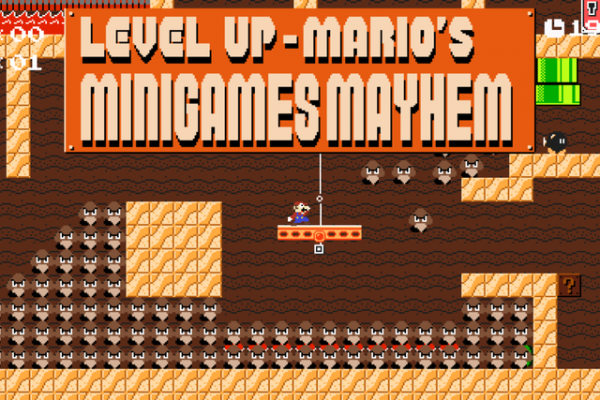
Pixel Party: Quick Challenge Rush strings together short tasks that change before you can settle into a rhythm. A round might ask you to clear a set of platforms, dodge an incoming obstacle, pick out a hidden target, or repeat a pattern you just saw. Because the task type shifts from one round to the next, you cannot rely on a single skill. Jumping, timing, and memory all get tested in turn, and the game rarely tells you in advance which one it wants next.
Controls and On-Screen Flow
Input stays deliberately simple. Arrow keys or WASD move your character, and the spacebar handles actions such as jumping. That minimal scheme keeps the barrier to entry low, but it also means mistakes come from reading the situation too slowly rather than from complicated inputs. Rounds follow one another without a break, so the moment a task ends, the next one is already underway. Losing all your lives ends the run, and the goal is to survive as long as possible.
Rising Speed and Boss Encounters
Difficulty does not ramp up in a polite, predictable curve. The pace increases without warning, so a sequence that felt manageable a minute ago can suddenly demand faster decisions. Boss encounters break up the rapid-fire micro-challenges and give the run a different kind of pressure point. Optional modifiers let newer players soften the difficulty while they build confidence, which keeps the game approachable for a family audience without removing the challenge for experienced players.
Scoring, Replay, and Who It Suits
A ranking system tracks high-score performance, giving each run a reason to be repeated. The pixel-art presentation draws on classic platform games, so the look feels familiar even when the challenge design does not. Sessions are short by nature, which suits players who want a quick burst of reflex and memory testing rather than a long campaign. Anyone comfortable with simple controls and sudden changes in task type will get the most out of it.
Compatibility
FAQ
Reader Comments
Sign in to comment
You must be logged in before posting a review or rating.
No comments yet. Be the first to comment!








Editorial Notes