
Dirt Track Sprint Challenge
Review
Dirt Track Sprint Challenge delivers a focused off-road racing experience that prioritizes accessibility and fair competition. The track designs are varied enough to keep each race feeling fresh, especially with the forward/reverse option. Vehicle handling feels responsive, and the practice mode is a thoughtful addition for players who want to improve without pressure. The lack of performance upgrades keeps the focus on driving ability, which is refreshing in a genre often cluttered with customization systems. While the visual presentation is simple, it serves the gameplay well. This title is a solid choice for anyone seeking straightforward, family-friendly racing action.
Full story
Circuit Design and Terrain
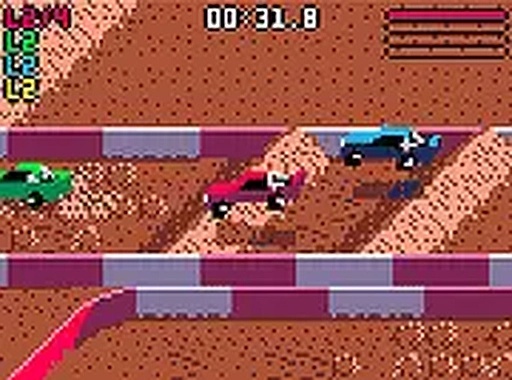
Each track in Dirt Track Sprint Challenge presents a distinct layout with curves, straight sections, and surface variations typical of off-road environments. The circuits are designed to test a driver's ability to maintain speed while adjusting to changing ground conditions. Players can race each track in forward or reverse orientation, effectively doubling the number of routes to learn. This design choice encourages repeated play as familiarity with each configuration becomes a strategic advantage.
Vehicle Handling and Control
The vehicle responds to simple inputs: accelerate, brake, and steer. Mastering the balance between speed and traction is key, especially on loose surfaces where sharp turns can cause loss of control. The arcade-style physics mean that overcorrecting or braking too late can cost valuable time. Practice mode allows drivers to explore these dynamics without the pressure of opponents, making it easier to develop a feel for the car's behavior on different track sections.
Competition Formats
Two primary modes structure the racing experience. Single race lets players pick a track and color for their vehicle before competing in a one-off event against AI opponents. Tournament mode strings together multiple races, with overall standings determined by cumulative performance. This format adds a layer of strategy, as consistent finishes become more important than winning every individual race. Both modes emphasize fair competition, with all vehicles sharing identical performance characteristics.
Visual Presentation and Atmosphere
The game adopts a clean, colorful visual style that keeps the focus on the action. Tracks feature distinct environmental themes, from dusty desert paths to muddy forest trails. The interface is minimal, showing only essential information like position, lap count, and a timer. This streamlined approach helps players stay immersed in the race without distraction. The overall aesthetic supports the arcade nature, prioritizing clarity and readability over realistic detail.
Learning Curve and Accessibility
New players can start racing immediately thanks to the simple control scheme and clear objectives. Practice mode serves as a low-pressure environment to learn track layouts and refine driving technique. The absence of complex upgrade systems or lengthy tutorials means that anyone can pick up the game and enjoy a race within seconds. This accessibility makes the title suitable for casual sessions, while the varying track configurations provide enough depth to keep more dedicated players engaged over multiple playthroughs.









Reader Comments
Sign in to comment
You must be logged in before posting a review or rating.
No account? Create one
No comments yet. Be the first to comment!